
- This event has passed.
Something of Value: Exploring the 1790- 2010 Indigenous Vermont Experience.
The Culminating Public Event of National Wildlife Refuge Week.
Missisquoi Wildlife Refuge Headquarters, 29 Tabor Road, Swanton, VT
9:30 AM-4:00 PM. October 12, 2025
Introduction to the Event
Scholars have neglected the last two centuries of the Vermont Indian story, leading to the belief that the state’s Native community had emigrated to Canada. But since a seminal gathering of Native tradition bearers in Burlington in May 2023, dedicated Vermont Abenakis have taken an abandoned history, anthropology and ecology into their own hands, — delving into government documents, collecting historic baskets and beadwork, and retrieving family memories. Others repatriate this knowledge by growing heritage crops in traditional Vermont Indian ways, curating Indian artifact collections, writing this
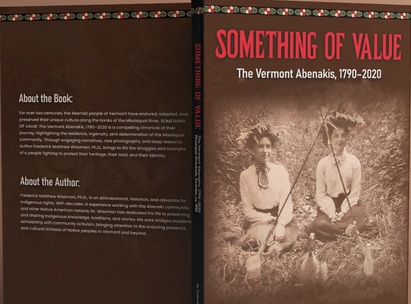
material down for posterity, and creating new, heritage-based art. This remarkable information was recently introduced to the public in Something of Value, Dr. Frederick Wiseman’s new book, available for purchase from the Wildlife Refuge.
This gathering updates Dr. Wiseman’s previous Abenaki Tribal training programs at the Wildlife Refuge in the summer of 2023 — augmented by new discoveries in genealogy, history, social structure, community governance and settlement patterns. The program will consist of dynamic PowerPoint lectures, detailed and evocative imagery, ancestral music, and impromptu discussion with attending tradition bearers. Some stories are ethnically definitive, such as a 1906 newborn’s, birth certificate unequivocally bestowing a Vermont-state certified “Indian” racial identity. Other stories are poignant, such as the “Abenaki Lullaby” tearfully recognized during a 2014 performance by an elder who had once heard it as an infant during the Great Depression. Some stories are intellectually radical stories include the discovery of a mid-19 th century American Abenaki art style and unearthing a complex 20th century Indigenous social structure.
Implications
Under the discriminatory criteria regarding Native American identity in North America, ethnic legitimacy flows from documented Native American genealogy, historical cultural continuity, ancestral cultural competency, Indigenous community structure and ancestral governance. The vast information landscape encompassing Vermont Indian ethnicity, history, culture and ecology has been carefully sampled, curated and organized by Dr. Wiseman to offer a comprehensive introduction to compelling evidence and direct certification of resident Vermont Indigeneity – a certainty that has been needed by the settler and Indigenous communities to restore and maintain intercultural respect, peace and tranquility. The presentations are underwritten by curated primary document and museum artifact research collections available for viewing and new works of fiction, and peer-reviewed academic publications available for purchase. There will be also be opportunities for direct, on-site encounters with these foundational Vermont Indian artifacts, imagery, official documents, and corroborating literature on the American Abenaki experience. The educational program will also provide opportunities for Q & A and discussion.
The Missisquoi Wildlife Refuge Program
9:30 Welcome, Coffee & Donuts
Welcome from community leaders, meet and greet tradition bearers, and have a light breakfast.
10:00-11:00 Introduction: What is a Vermont Indian?
Discussion of the records of historical indigeneity in Vermont state and federal certificates and other documents. Primary source material such as birth certificates, Selective Service registration cards, Eugenics records; prison and medical records, and death certificates will be shared and explained. Examples of these important records are illustrated in the Vermont Birth, Eugenics, & death records: the revolution documents booklet available for sale.
11:00-12:00 Traces of an Indian Past: 1790-1970
Discussion of the written and testimonial record of resident Vermont people believing, making and doing “Indian things” in the 19th and 20th centuries. This historical material includes an indigenous Vermont language, apparently independent from Canadian Abenaki, 19th and 20th century basketmaking, hunting, fishing, architecture, and other minor activities. We also consider the physical and graphic record of cultural continuity, much of it referred to in Vermont Indigenous Material Culture, Abenaki Beadwork, and the in-press, Abenaki Basketry which will be available for sale.
12:00- ca. 1:00 PM Lunch Break “Lunch on your own.” Suggestions for takeout and delivery available.
1:00-2:00 A Modern Vermont Indigenous Year, ca. 2010.
An introduction to the regionally unique horticultural/ceremonial calendar that has
persisted in Vermont and nearly New Hampshire until today, including unique landrace seeds, field preparation, planting, and crops, as well as calendrical and horticultural ceremonies, such as the Forgiveness Moon solstice-adjacent ritual, and the Field Blessing, Green Corn, and Harvest Ceremonies. This distinctive Vermont biocultural experience is
placed in a larger regional context in The Seven Sisters… book, also available
for sale in the MWR Headquarters gift shop.
2:00-3:00 The Vermont Indian Community: 1900-2010
A discussion of new insights into traditional 19th and 20th century American Abenaki community structure, governance, organization and settlement geography. Distinctive regional Indigenous sub-communities include forest camps, tourist-adapted encampments, complex linear arrays of tiny rural settlements and dispersed and
concentrated settlements within Euroamerican villages. To find more interesting detail on these Vermont Indigenous communities, refer to Chapter V in Something of Value.
3:00-4:00 Book Signing for Dr. Wiseman’s Something of Value Book.
This is the time to meet and greet Vermont Abenaki Tradition bearers, to examine historical arti-facts up close, and to purchase informational materials on the American
Abenakis of Vermont.
Supported in part by Vermont Humanities